Lao Dongyan: A movie that can only be described as good, good, good, I won't watch it
Lao Dongyan: The following is the full movie review written by my child after watching "Ne Zha 2":
I watched "Ne Zha 2" tonight and wanted to write a few words.
First, let me talk about why I went to see this movie. The main reason is its immense influence. This movie has far exceeded previous box office laws; it is said that over 200 million people in China have watched it. Therefore, the views it expresses must resonate deeply with social emotions.
The previous box office record holder was "The Battle at Lake Changjin," which I watched and found quite mediocre. But I understand one thing: the social emotion at the time was patriotism, focusing on the main melody. This sentiment was sparked by "Wolf Warrior," so the box office for these main-melody movies was surprisingly high.
Of course, because they are main-melody films, I suspect some were organized viewings by work units, but they certainly caught the wave of patriotism. However, I feel that was the last wave of patriotic fervor. Presumably, the current social emotion is no longer dominated by the main melody; this year's "Operation Merman" was a miserable failure. So, what is the current trend? What is the current social emotion?
"Ne Zha 2" caught it. The current social emotion must be highly aligned with what "Ne Zha 2" wants to express, which is a key factor in its huge commercial success. What is that? I want to know.
In terms of production, "Ne Zha 2" is very high quality. I watched it in 3D, and many scenes were truly grand—the lava surrounding Chentang Pass, the demonic beasts, the Heavenly Court, the subsequent great battle, the skulls in the Tianyuan Tripod, and the bursting branches and vines; it was very shocking.
I heard that the segment where Ne Zha breaks through the Heart-Piercing Curse took a year to complete. In terms of production, it is on a completely different level from the first movie. Putting heart into producing a film is definitely a point that attracts audiences. After all, nowadays, it is very rare to find a production crew that puts effort into studying and crafting the work. Next is the plot.
The overall plot has many ups and downs and is not boring. There is a twist at the end. I thought Shen Gongbao would massacre the city, but it was the immortals. To a large extent, it broke the limitations of identity; although it was ultimately a battle between demons and gods, who stood on the moral side had broken traditional prejudices.
What attracts people is that there are no truly "good" or "bad" people here, only reasons for doing things. It no longer emphasizes rigid black and white, but creates a gray world, emphasizing the complexity of human nature. There is desire, greed, and indifference, but also warmth and courage. In terms of characters, Shen Gongbao and the Wuliang Immortal were well-crafted.
Production attracts the audience, characters attract the audience, and finally, there is the theme.
First, let's talk about the theme of "Ne Zha 1." When I watched it, I was only 11 years old and felt it was filmed exceptionally well and was very moved. But looking back at the concept of "Ne Zha 1" now, I feel it is somewhat shallow.
"My fate is determined by me, not by heaven." My 11-year-old self believed this very naively. I believed that our fate is in our own hands, controlled by ourselves, and whether you succeed or not is up to you. Presumably, the social emotion a few years ago was like this—believing that individual effort can change fate.
But in the experience of the past few years, I have increasingly discovered that a latent rule limits you. I think this rule is the era, which is why I felt more deeply after reading "To Live." How can a person's fate be changed by themselves alone? A person's fate is mainly influenced by the great era. A single policy, a single law, a movement, is enough to change most of your life.
Each of us is an ant in the era; if individual effort does not meet the right timing, the probability of success is truly not high. If one still emphasizes today that as long as you work hard, you can succeed and break the limitations the era places on you, it is indeed quite naive. However, in 2019, the social atmosphere believed in this, which is why "Ne Zha 1" was very popular.
But in recent years, the global environment has been quite volatile, and social emotions have shifted significantly.
So, what does the theme of "Ne Zha 2" focus on? The twist regarding the antagonist at the end is the theme it wants to embody. This time, it is the influence of power on individual fate. The Wuliang Immortal is the biggest villain; he massacres cities for desire and greed, arbitrarily capturing people to refine immortal elixirs, and ordinary citizens and the demon race are merely leeks to be harvested at will. For example, Shen Gongbao and other demons, no matter how hard they worked, simply could not get the recognition of the immortals and suffered many injustices. This resonates with the situation of most young people today.
Social emotions have changed; effort has been pushed to the background. This is also why the incident where Li Jiaqi told people to reflect on their salaries and hard work while selling eyebrow pencils suddenly triggered so many people's anger. "Sometimes look for the reason within yourself; has your salary increased in all these years, have you worked hard?" Now everyone realizes that working hard and being serious about work does not necessarily lead to promotion; we suffer too many injustices.
So, who is to blame for these injustices? "Ne Zha 2" attributes them to the evil of individual power, such as the Wuliang Immortal. I think the power here refers to the real-world corrupt officials and capitalists. Our current social emotion is that being serious and hardworking does not necessarily lead to success because of too much suppression and injustice, and these are the consequences of the evil of power. I am doing poorly because it is the boss's problem, it is the company's problem, it is the problem of the capitalists at the top, or even the problem of foreign forces. The theme of "Ne Zha 2" fits this emotion perfectly, so it received high praise.
But is the injustice we suffer truly just the exploitation of power?
That is a reason, but not the primary reason.
Why can these capitalists and corrupt officials commit so much evil? Why are they not restrained? Is it just their own greed and desire? No, it is the condoning of the system. Ordinary people never even thought that this is a structural problem; the environment itself condones the creation of these bullies. This is an error in attribution. And this movie seems to have no reflection on the overall rules, only believing that injustice and all tragedies are caused by these bullies.
There is a line in the movie, spoken by Ao Run, "Who sets the rules of the world?" Therefore, her conclusion is that one must attach oneself to power to find a way to survive. Ao Bing says that if there is no road ahead, he will carve one out. Ne Zha and Ao Bing eventually use power to defeat power.
But did they break the rules? If they weren't the Spirit Pearl and the Demon Pill, if they didn't have this kind of power, could they have defeated them? Therefore, they are not weeds, but people born with power. None of us sitting here are Ne Zha or Ao Bing; we are just the citizens of Chentang Pass who can be arbitrarily slaughtered.
Ne Zha and Ao Bing defeating the Wuliang Immortal is just one power defeating another power, like the peasant uprising of Chen Sheng and Wu Guang. As for reflection on the overall rules, there is very little. Why is it still an imperial system? Why is there no restraint on power? If the rules are not changed, and only who holds the power is changed, it is truly of no use to the people. You might just encounter a benevolent ruler, but what if you encounter a tyrant? The system has no restraint on power, and you will still be arbitrarily trampled and violated. It is just that the movie seems to have never thought about these questions.
Furthermore, when the overall rules are problematic, is the Yuanshi Tianzun at the very top of the Chan Sect not problematic? Is this not also his condoning? How can he stand aside? Did he want to change the rules? Why are the demon and devil races naturally discriminated against? Why is the path to immortality so singular? Does the system have restraints for the strong? Does it have protection for the weak? This system only makes way for the strong, making it easier for them to manage; as for the rights of the weak, it does not care in the least.
Ne Zha and Ao Bing only knocked down one strong person, not the overall rules, so such things will happen again and again.
If the rules are not changed, no matter how hard you work, you and I are still just grass, still ants that can be arbitrarily stepped on by power.
[caption id="attachment_1983" align="aligncenter" width="1170"]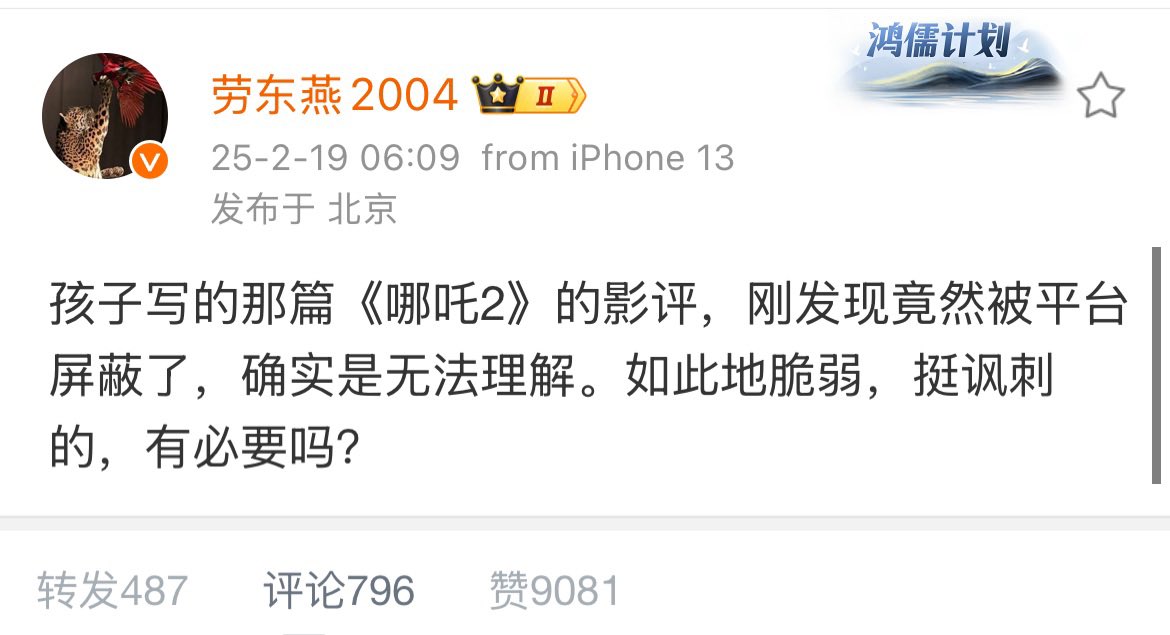 1[/caption]
[caption id="attachment_1983" align="aligncenter" width="1170"]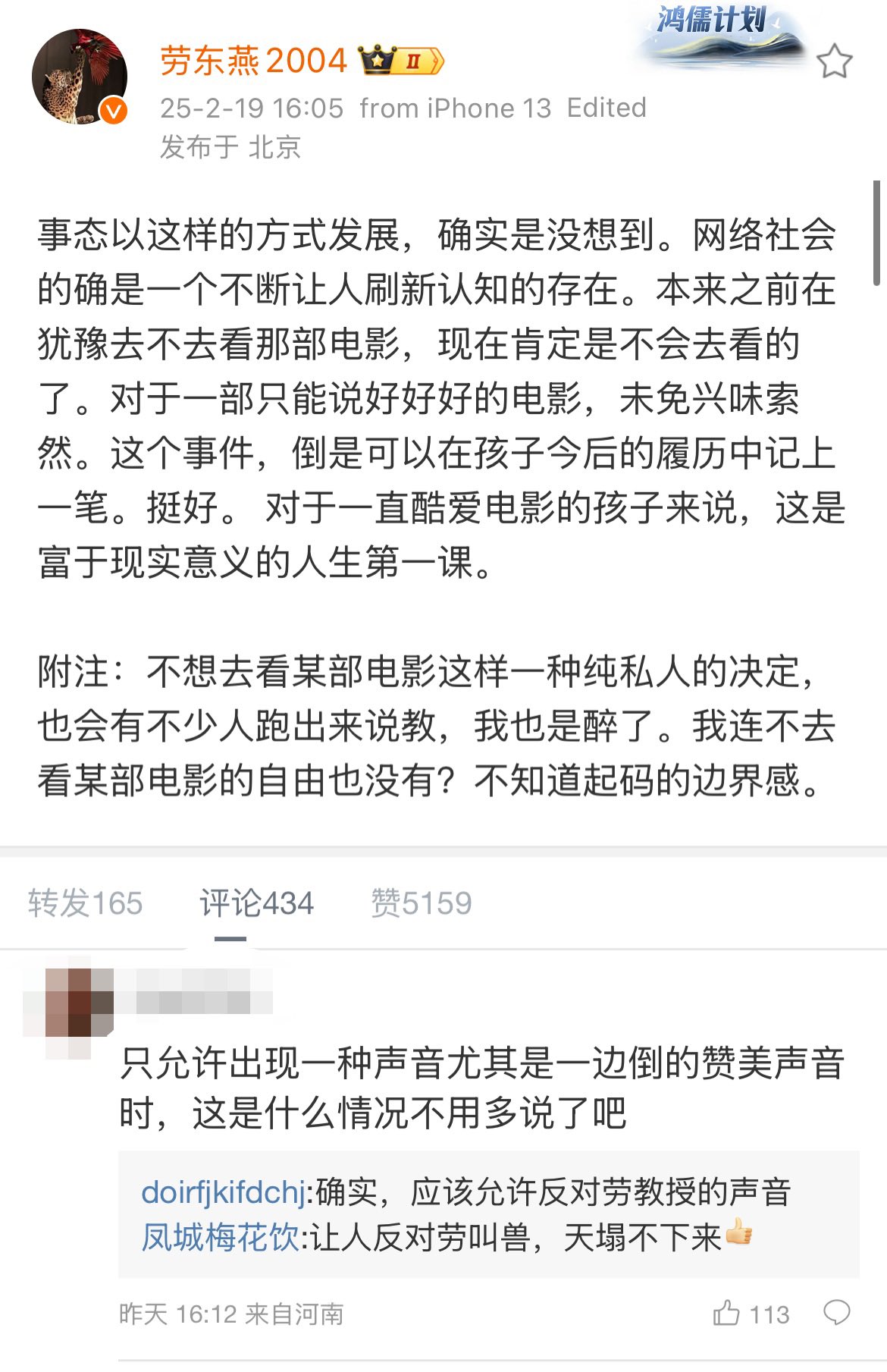 2[/caption]